
JJ Skippy
Well-known member
Looking at the major freight carriers globally, it’s safe to say there are a lot of choices with the mainstream operators. Let’s look at Federal Express (now FedEx) in 1:400 scale and see how it’s evolved over the years.
FedEx’s History
Federal Express was founded on June 18, 1971, by Fred Smith. As an undergrad student, he submitted his concept to a professor of his at Yale University, and contrary to popular belief the grade was not a C, as the actual grade is unknown. FedEx pioneered the idea of having one carrier take cargo from seller to buyer.
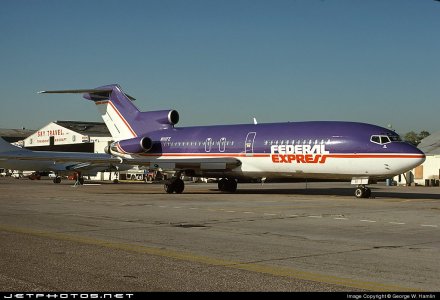
The first jets FedEx had were Dassault Falcon 20s; the very first airframe is on display in Washington DC at the Steven F. Udvar-Hazy Center. By 1977, FedEx was able to acquire several 727-100s, and from there grew their operations. They added some 737-200 Combis the next year, though these were phased out a few years later. Following their acquisition of Flying Tiger Line in 1989, FedEx operated some Boeing 747 and DC-8 freighters.
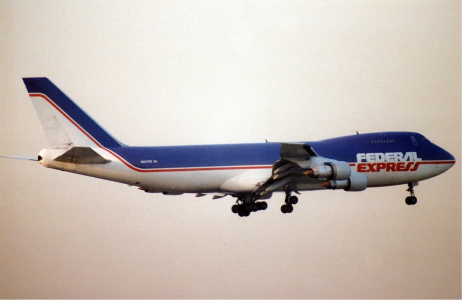
A Federal Express Boeing 747-200F. This former Flying Tigers bird (N806FT) went on to fly with Kalitta Air (N706CK) from 2004 to 2010.
By 1994, the FedEx nickname became the official name of the company, though a hybrid naming system was used for a few years. They grew internationally around this time too, opening hubs in Asia and Europe. FedEx took many old passenger planes, like DC-10s and MD-11s, and converted them for freighter use; the former was fully retired in 2023.
Today, FedEx operates a fleet of nearly 400 mainline freighters, plus another 300+ aircraft through contracts under their FedEx Feeder brand. Here, they operate ATRs and Cessna 208/408s to smaller communities where they otherwise could not handle FedEx jets. They are the largest operator of the freighter A300, Boeing 757, 767, 777, and MD-11s, and also have the largest Cessna 208 fleet of any operator.
The Models
As of December 2025, 97 FedEx models have been announced, including one future release from JC Wings, an MD-11 (N604FE). With such a large volume of models, I wanted to try a different layout to represent them all, so below is a table with the aircraft type, registrations produced, and releases by manufacturer. A key can be found below the table.
KEY
Purple Plane (old) release
Purple Tail (current) release
Flying Tiger hybrid release
*special livery, noted in release column
f = Flaps Down
FedEx’s History
Federal Express was founded on June 18, 1971, by Fred Smith. As an undergrad student, he submitted his concept to a professor of his at Yale University, and contrary to popular belief the grade was not a C, as the actual grade is unknown. FedEx pioneered the idea of having one carrier take cargo from seller to buyer.
The first jets FedEx had were Dassault Falcon 20s; the very first airframe is on display in Washington DC at the Steven F. Udvar-Hazy Center. By 1977, FedEx was able to acquire several 727-100s, and from there grew their operations. They added some 737-200 Combis the next year, though these were phased out a few years later. Following their acquisition of Flying Tiger Line in 1989, FedEx operated some Boeing 747 and DC-8 freighters.
A Federal Express Boeing 747-200F. This former Flying Tigers bird (N806FT) went on to fly with Kalitta Air (N706CK) from 2004 to 2010.
By 1994, the FedEx nickname became the official name of the company, though a hybrid naming system was used for a few years. They grew internationally around this time too, opening hubs in Asia and Europe. FedEx took many old passenger planes, like DC-10s and MD-11s, and converted them for freighter use; the former was fully retired in 2023.
Today, FedEx operates a fleet of nearly 400 mainline freighters, plus another 300+ aircraft through contracts under their FedEx Feeder brand. Here, they operate ATRs and Cessna 208/408s to smaller communities where they otherwise could not handle FedEx jets. They are the largest operator of the freighter A300, Boeing 757, 767, 777, and MD-11s, and also have the largest Cessna 208 fleet of any operator.
The Models
As of December 2025, 97 FedEx models have been announced, including one future release from JC Wings, an MD-11 (N604FE). With such a large volume of models, I wanted to try a different layout to represent them all, so below is a table with the aircraft type, registrations produced, and releases by manufacturer. A key can be found below the table.
Aircraft Type | Registrations Produced | Releases |
| A300-600F | 650FE, 651FE x2, 683FE*, 688FE, 692FE | Aeroclassics - 4 Blue Box - 1 *Disney 100 Years of Magic |
| A310-200/300F | 420FE, 442FE, 452FE x2, 802FD, 803FD | Dragon Wings, Gemini Jets - 2 Aeroclassics - 1 |
| A380-800F | 380FE x2, N/A | Dragon Wings, Gemini Jets, Magic Models - 1 |
| B727-100F | 111FE, 118FE, 166FE, C-FBWY, C-GBWH | Aeroclassics - 5 |
| B727-200F | 219FE, 235FE, 271FE, C-FMEA | Aeroclassics - 3 Gemini Jets - 1 |
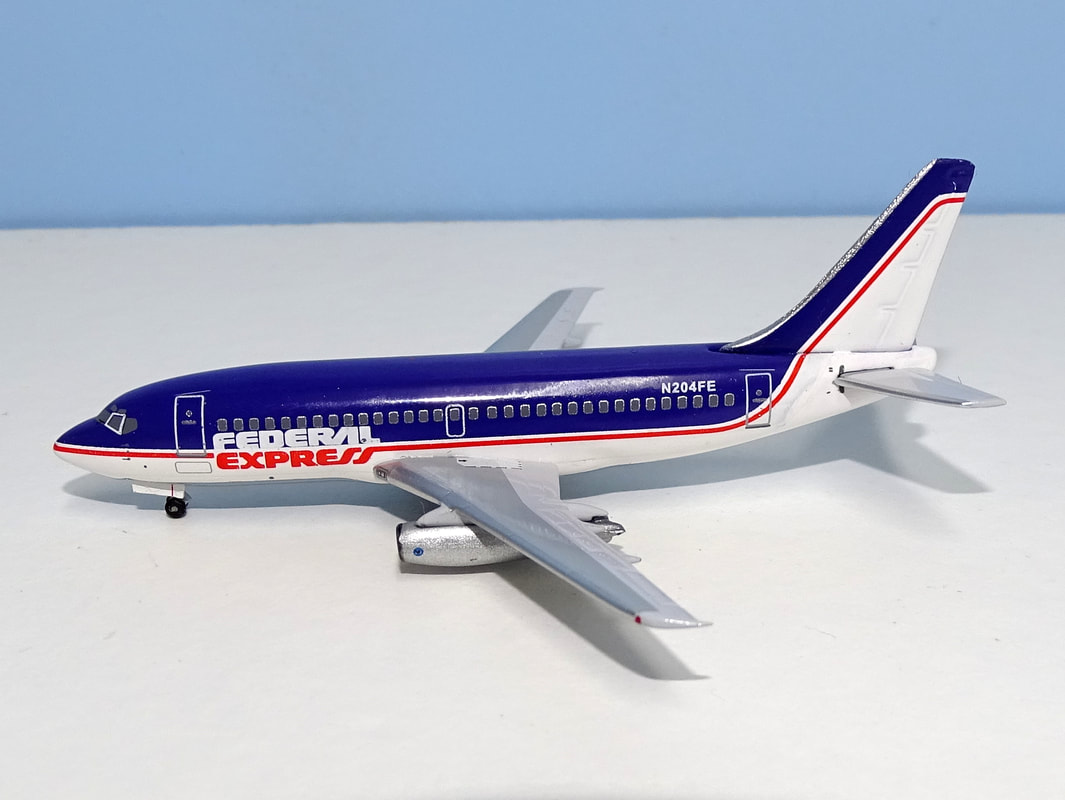
| B737-200F | 201FE, 204FE | Aeroclassics, SMAC - 1 |
| B737-800F | G-NPTD x2 | Gemini Jets, Panda - 1 |
| B747-200F | 631FE x2, 632FE, 633FE, 636FE, 641FE | Dragon Wings - 5 BigBird - 2 |
| B757-200F | 901FD, 920FD, 921FD, 985FD | Gemini Jets - 3 NG - 1 |
| B767-300F | 101FE, 102FE, 103FE, 104FE, 144FE, 277FE*, 68079 | Gemini Jets - 5 Phoenix - 2 *100th FedEx 767 |
| B777-200F | 777FE x2, 850FD*, 866FD, 878FD, 880FD, 882FD, 883FD x2*, 884FD, 885FD, 886FD x2*, 887FD, 889FDf, 892FD*, 893FD*, 895FD, N/A | Gemini Jets - 12 Phoenix - 6 Dragon Wings - 2 *Panda Express |
| DC/MD-10F | 68055, 388FC, 303FE, 318FE, 319FE, 322FE, 386FE x2, 398FE, 566FE, N/A | Dragon Wings - 6 Aeroclassics - 3 Gemini Jets - 2 |
| MD-11F | 525FE, 583FE x2* x1, 584FE, 585FE*, 594FE, 595FE, 601FE x2, 602FE, 603FE, 604FE x2, 605FE, 606FE, 608FE, 614FE, 620FE, 625FE | Dragon Wings - 8 Gemini Jets - 6 Phoenix - 4 Golden Wings, JC Wings - 1 *Panda Express |
KEY
Purple Plane (old) release
Purple Tail (current) release
Flying Tiger hybrid release
*special livery, noted in release column
f = Flaps Down